Latest · LA Today Wire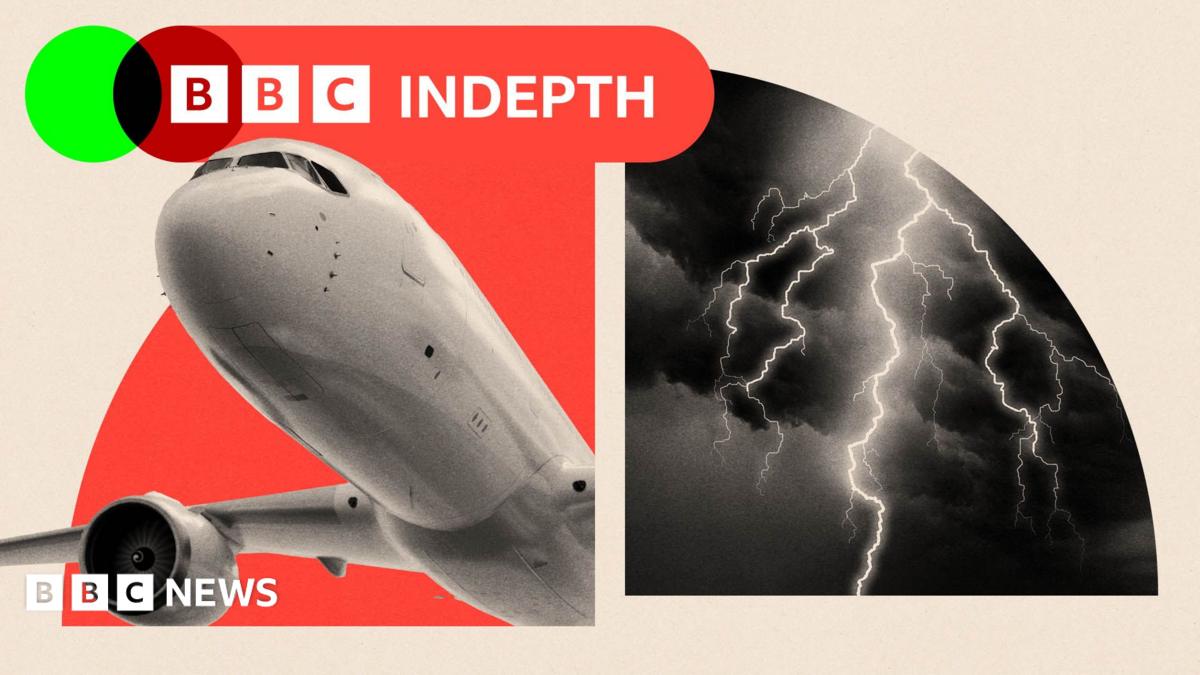
By Theo Leggett International business correspondent As the country sweltered through one of the many heatwaves of a baking summer in late June, towering thunderclouds gathered over the south of England and across much of northern Europe. It was a Saturday, with the holiday season approaching, and thousands of passengers were heading to London's Heathrow and Gatwick airports to catch flights abroad. The weather turned chaotic for travellers.
As air traffic controllers struggled to route aircraft around the storms, airspace became heavily congested, leading to delays and cancellations. Around 900 flights to and from both airports were delayed by up to 11 hours, and dozens more were cancelled. Passengers expecting flights into London also faced long waits and uncertainty. Industry experts believe this incident should serve as a warning about the increasing instability of weather systems due to climate change.
Tim Atkinson, an airline risk consultant and former pilot, warns that such incidents are likely to become more common. He notes that the crowded skies over the UK and northern Europe make the region particularly vulnerable. Atkinson predicts that all of London's airports could be affected by storms simultaneously, potentially causing major disruptions and even putting lives at risk. He states, 'We're seeing very rapid climate change. We're moving from weather events that the system can handle to situations where, with little predictability, all London airports could be taken out quickly.'
At the National Air Traffic Services (NATS) control centre in Swanwick, Hampshire, thunderstorms are a major concern. Air traffic controllers monitor storm cells on radar screens and scrutinize weather forecasts. Storms can shrink available airspace, forcing rerouting and diversions. If planes cannot land at one airport due to high winds, they may need to divert to another, creating additional challenges if too many unscheduled aircraft land at a busy airport.
Convective weather, caused by rapidly rising moist air, forms thunderstorms. Higher temperatures mean more convective energy, potentially leading to more violent storms. The UK's Met Office notes that while overall thunderstorm numbers may not increase, those that do could be more impactful. Pilots avoid flying through convective weather due to turbulence and hail risks, which can damage aircraft and endanger passengers.
Clear-air turbulence, invisible but increasingly common, poses another threat. It can cause severe turbulence, leading to incidents like the Lufthansa flight from Austin to Frankfurt in March 2023, where passengers were thrown around the cabin. While rare, such turbulence is projected to increase significantly.
Rising sea levels also threaten aviation. Storm surges from hurricanes can flood airports, as seen with Hurricane Sandy in 2012, which flooded New York's LaGuardia Airport. With 269 airports worldwide at risk of flooding, airports like Amsterdam Schiphol, London City, and Newark Liberty International are vulnerable. Mitigation costs could reach up to $57 billion by the middle of the century.
The aviation industry faces challenges in meeting carbon neutrality by 2050 while accommodating growth. Experts like Andrew Charlton, an airline executive, acknowledge that more disruptions will occur, emphasizing the need for infrastructure to handle delays and cancellations. While solutions like improved forecasting and new technologies are being explored, the industry must prepare for increased weather-related disruptions.
Source: BBC