Latest · LA Today Wire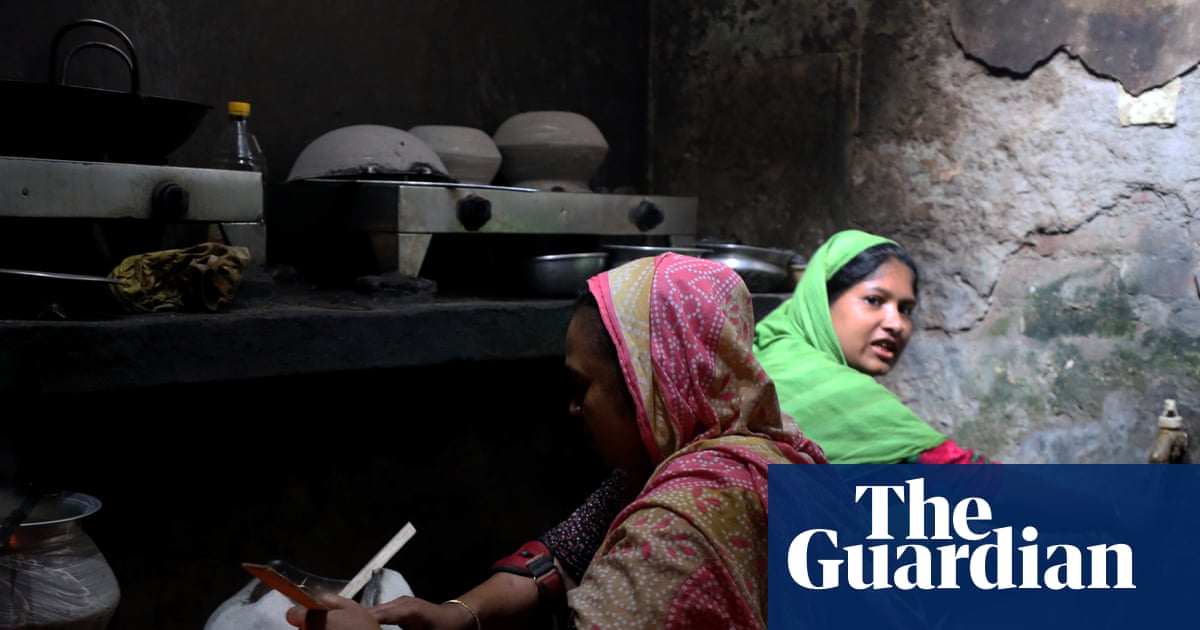
A t 1am, Halder’s alarm goes off and the 34-year-old Bangladeshi bank employee rises and heads to her kitchen. She is up at this time not for work but to cook for her family. An energy crisis paralysing the capital, Dhaka, a city of almost 40 million people , means this has become the only time when the piped gas supply is strong enough to allow cooking.
The city now operates in darkness, as people try to continue their lives with power even in public areas shut off early in the evening to preserve energy. It is a crisis created by the US war on Iran but exacerbated by Bangladesh’s reliance on imported energy. It is also a challenge that a government elected only weeks before the war began has struggled to meet.
“I don’t want anything extraordinary from the government; I want to turn on the stove and find gas, I want to switch on the light and find electricity, I want clean water from the tap,” says Halder. “These are not luxuries. “Some nights I’m sleeping three hours, sometimes less.
Then I’m expected to be a mother, run a household and do a full day at the office as if everything is normal.” The Bangladesh Nationalist party government was elected in February, following protests in 2024 that overthrew the previous government of the Awami League, which had been in power for 15 years and was accused of political repression, corruption and economic mismanagement. After a period of interim government, the BNP was tasked with forging a new path for the country but within weeks, war had broken out in Iran and the closure of the strait of Hormuz meant crucial gas shipments from the Middle East were disrupted. Shopkeepers have been ordered to close early as part of energy-saving measures, with most places shuttered by 8pm.
Photograph: Mahmud Hossain Opu/AP The government responded by rationing energy, and ordered shops, markets and shopping centres to close by 8pm – an hour earlier than previously permitted. Illuminated billboards must be switched off by 7pm, with exemptions only for hospitals, pharmacies, food shops and emergency services. The situation is worse in rural Bangladesh, where in August people were going without electricity for up to 16 hours a day.
National load-shedding, or cuts in output, exceeded 3,000MW during the worst of the shortage, according to government data . But it is in Dhaka, a city usually in constant motion, that the change appears most dramatic. Long stretches of roads in areas packed with offices, businesses and shops, such as Mohammadpur, Kawran Bazar and Dhanmondi, are now eerily dark.
The crisis has forced local residents to make calculations constantly, such as when the gas might be strong enough to cook with, how long a fan can be run during the humid summer, and how long the queue might stretch at the petrol station. A queue for a petrol station in Dhaka in April. Commuters have faced difficulties getting home as fuel shortages push up prices.
Photograph: NurPhoto/Getty As a result, almost 3 million more people are expected to be facing food insecurity in the final months of this year, a rise of 18% from the summer figure of 15.3 million, according to the Integrated Food Security Phase Classification, a global malnutrition monitor. Ahmed, 50, who wished to give only his last name, runs an electrical workshop in the central area of Mohammadpur but lives in Keraniganj, on the outskirts of Dhaka, where housing is cheaper. A commute he managed for years now fills him with dread.
Once Ahmed has closed his shop, transport is hard to find and more expensive, and he fears being mugged in streets now left in darkness. “By the time I close the shop, it is already dark,” he says. “Then you are thinking all the way home about whether someone will stop you, rob you or take your phone and money.
“Sometimes I think I should just leave the country and try somewhere else,” he says. “But I am 50; I don’t have the money needed to go. So I think about it, and then I feel there is nowhere to go.” Daily gas demand in Bangladesh is about 107-113m cubic metres (3.8-4bn cubic ft), far outstripping the available supply of roughly 74m cubic metres. skip past newsletter promotion after newsletter promotion The country produces little energy domestically, so it is reliant on gas from the Middle East, which provides almost half of Bangladesh’s energy supply .
The US war with Iran has hit Bangladesh’s liquid natural gas (LNG) imports particularly hard – between July and August, imports fell by 83% . The situation was made worse on 21 July, when a fire put one of Bangladesh’s two floating LNG terminals out of action, temporarily adding to disruptions that have forced factories to run costly generators, cut production or even close down, raising manufacturing and transport costs. As farmers run short of fuel, it is preventing irrigation for crops and causing their fields to dry out.
Photograph: NurPhoto/Getty Images Khondaker Golam Moazzem, research director at the Centre for Policy Dialogue, a Dhaka thinktank, says the disruption added to longstanding frailties in Bangladesh’s energy system, caused by mismanagement of public utilities. As well as leaving households struggling, energy-intensive sectors of the economy such as textiles, ceramics, glass and steel, transport, agriculture, fisheries and general commercial activity were all affected. “Almost all economic activities have been operating at significantly lower levels of their usable capacity because of the energy crisis,” Moazzem says.
At Krishi vegetable market in Dhaka, 41-year-old Aleya Begum struggles to run her roadside stall selling tea and street food. It is her family’s main source of income and pays for her son’s education; she had also been saving for her daughter’s marriage. Begum says the price of vegetables has risen so much that she can afford barely enough for her family.
“I used to be able to fill a bag with vegetables without spending very much,” she says. “Now I can spend a bagful of money and still not fill the bag.” She has cut back on fish and chicken, and has to think twice about whether she buys eggs. A teacher uses the light of a mobile phone to teach students during a power cut at a school in Shyampur, Dhaka, in July.
Photograph: NurPhoto/Getty Images Begum does not pay much attention to statistics on lost megawatts of energy or debates over the extent to which the government inherited an economic crisis or if it was caused by events abroad. “Governments can say many things, but we look at the market,” she says. “If prices don’t come down and our lives don’t get easier, how are we supposed to understand that anything has changed?
“I don’t need big promises,” she adds. “I need to be able to go to the market, feed my family and come home without worrying about how I will manage tomorrow.”
Source: The Guardian